
Trying? See your window, and how sure it is.
Splash combines LH tests, mucus, temperature and PdG into an ovulation estimate labelled Estimated, Likely or Confirmed. Free and private.
In short: Splash combines LH tests (High, Peak or numeric readers), cervical mucus, basal body temperature with a coverline, Apple Watch wrist temperature, wearable skin temperature via Health Connect and PdG tests into one ovulation estimate, labelled Estimated, Likely or Confirmed with how it was worked out. A trying-to-conceive dashboard shows best days to try, days past ovulation, a test-date countdown, the implantation window, a NICE-based GP prompt and a preconception checklist. Estimates only; not contraception.
Free in Splash. A paid feature in Clue Plus. Checked Oct 2026
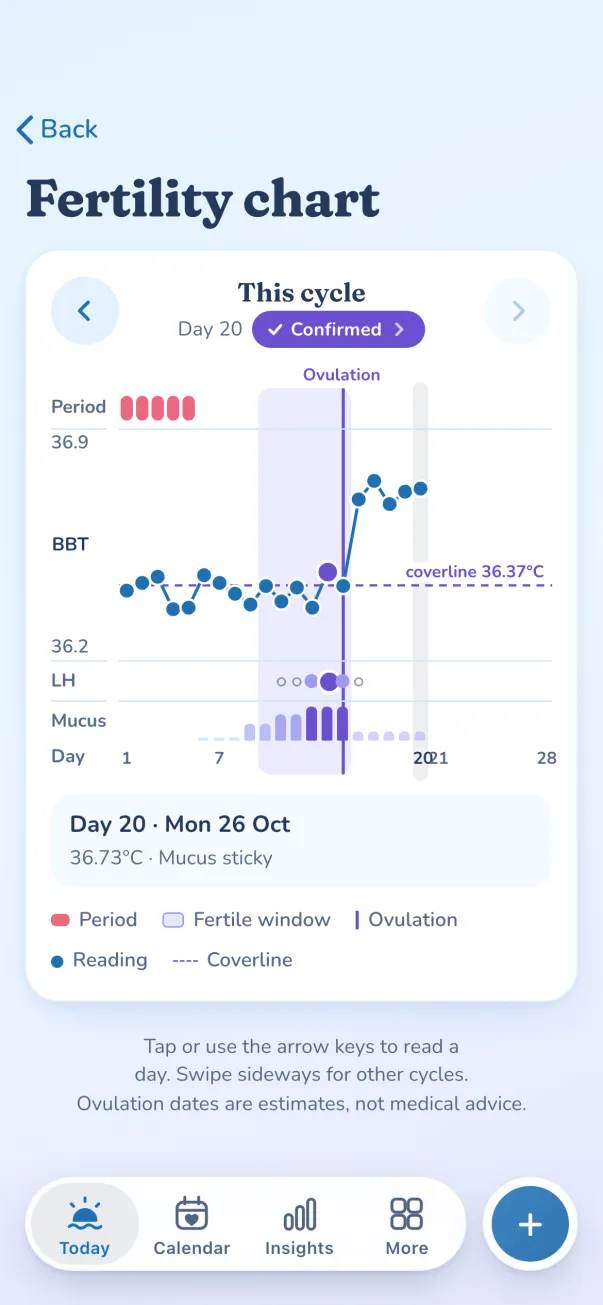
LH, mucus, temperature and PdG, combined into an ovulation estimate that says how sure it is.
Every sign, together
LH tests (High, Peak or a reader’s number), cervical mucus, basal temperature, Apple Watch or wearable temperature and PdG tests, combined into one estimate.
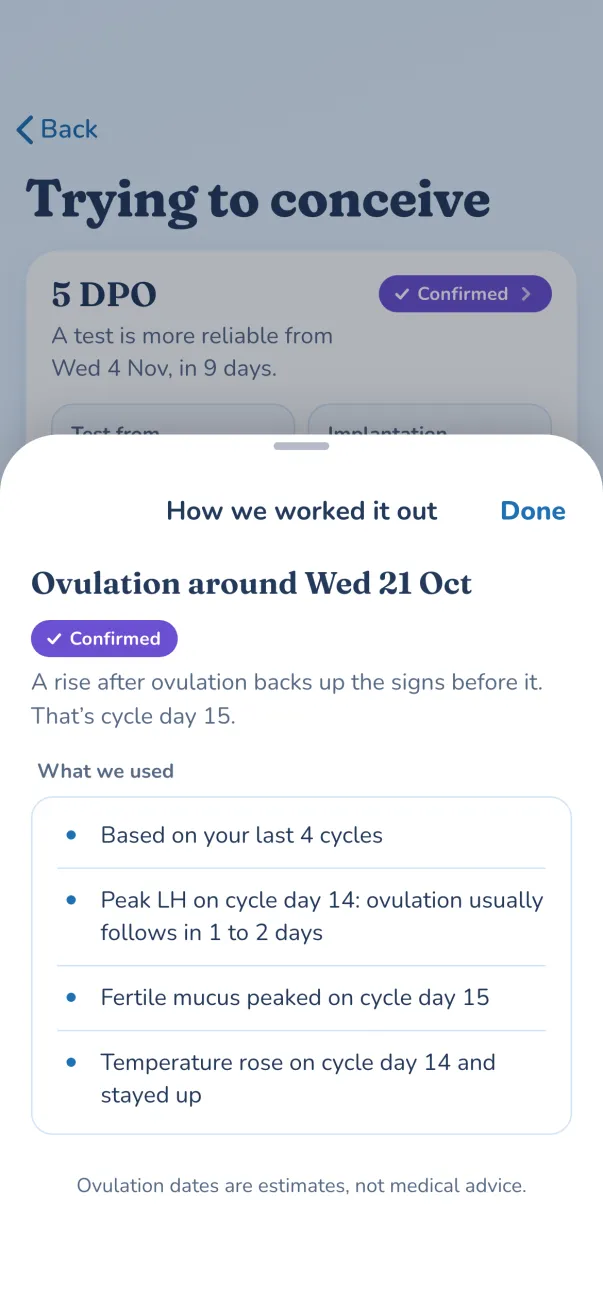
Estimated, Likely or Confirmed
Each ovulation day carries a label and a short “how we worked it out”, so you can see why.
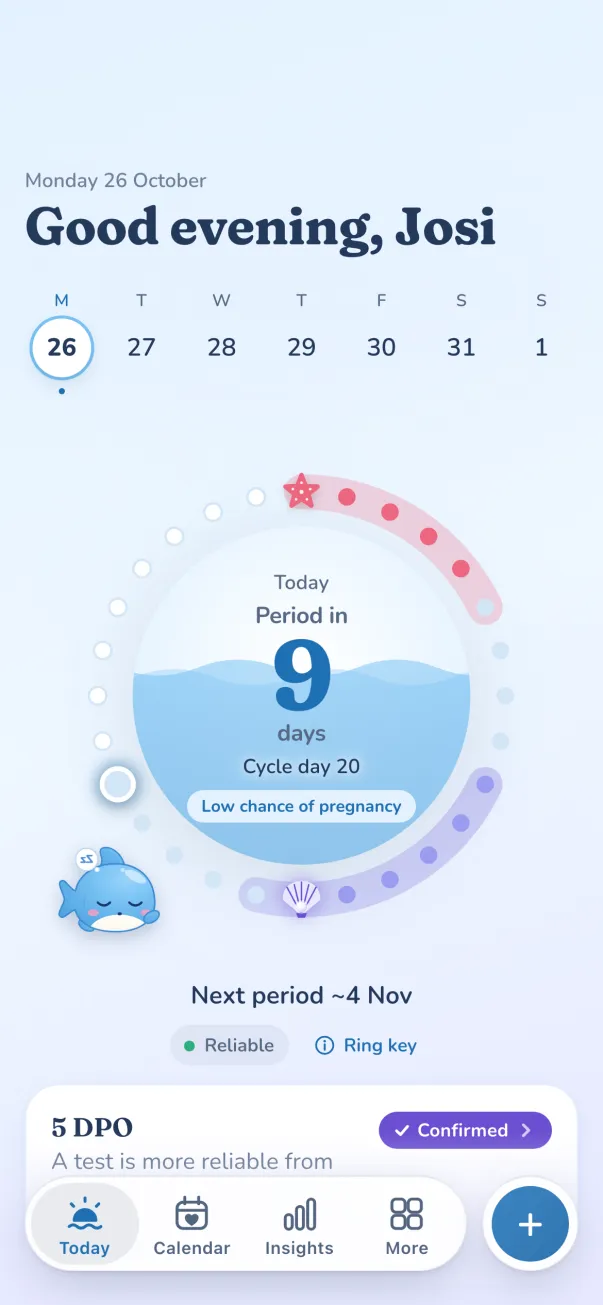
A fertility chart
Temperature with a coverline, LH, mucus and PdG on one chart, cycle by cycle.
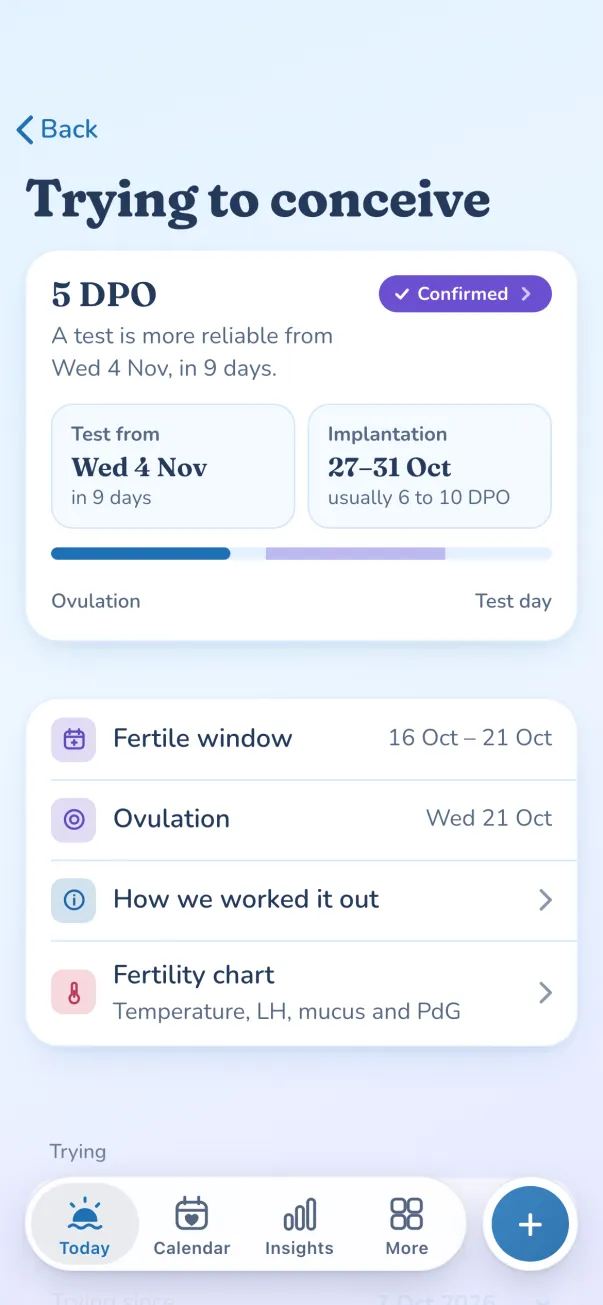
A dashboard for trying
Best days to try, days past ovulation, a test-date countdown, the implantation window, a GP prompt based on NICE guidance and a preconception checklist.
See the signs line up.
Your fertility chart puts temperature, the coverline, LH, mucus and PdG on one page. Replay this example cycle to see the label move from Estimated to Confirmed.
Estimates to help you understand your cycle. Splash is not contraception.
EstimatedEstimated ovulation, around day 15
LikelyLikely ovulation, day 15
ConfirmedOvulation confirmed, day 15
How we worked it out
- Your last 6 cycles put ovulation around day 14 to 16
- No tests logged yet this cycle, so the window stays wide
Best days to try: about day 13 to 15
How we worked it out
- Peak LH on day 14: ovulation usually follows in 1 to 2 days
- Egg-white mucus peaked on day 14
- Your earlier High readings on days 12 and 13 opened the window
Best days to try: today and yesterday
How we worked it out
- Temperature stayed above your coverline from day 16
- Peak LH on day 14 and the mucus peak agree
- PdG tests stayed positive on days 20 to 22
8 days past ovulation · test from Sat 7 Nov
LH High · PeakEgg-white mucusBest days to tryExample cycle, made-up data
Every sign, in one estimate
Splash starts from your own cycle history, then updates as you log. LH tests count whether they read High or Peak, or give a number from a reader. Cervical mucus, basal body temperature, Apple Watch wrist temperature and skin temperature from apps like Samsung Health, Fitbit and Oura through Health Connect, and PdG tests all add to the same estimate.
Estimated, Likely or Confirmed
Every ovulation day carries a label. Tap it to see how Splash worked it out, for example “Peak LH on day 14: ovulation usually follows in 1 to 2 days” or “Temperature stayed above your coverline from day 16”.
A fertility chart with a coverline
Temperature, the coverline, LH, mucus and PdG sit on one chart, so you can see the signs line up cycle by cycle. Disturbed temperatures, such as after a short night, are marked rather than trusted.
A dashboard for trying
Best days to try, days past ovulation (DPO), a countdown to a sensible test day, the usual implantation window, a preconception checklist (folic acid, vitamin D and more) and a gentle GP prompt based on NICE guidance.
PCOS and irregular cycles
With PCOS, LH can rise more than once or stay high. Splash keeps each rise in mind, can treat a frequent High reading as your baseline, and widens the window instead of pretending to be sure.
Kind about the wait
Trying can be hard. The library covers how long conception usually takes, looking after your mental health, and when to ask for help. Estimates are for understanding your cycle. Splash is not contraception.
Questions
Can Splash tell me exactly when I ovulate?
No app can be certain from logs alone. Splash combines your signs into an estimate, labels it Estimated, Likely or Confirmed, and shows how it worked it out.
What do Estimated, Likely and Confirmed mean?
Estimated comes from your cycle history alone. Likely means an LH surge or a mucus peak points to a day. Confirmed means a later sign, such as a temperature shift above your coverline or positive PdG tests, agrees.
Which tests and devices does it use?
LH strips (High and Peak), numeric LH readers, cervical mucus, basal body temperature, Apple Watch wrist temperature through Apple Health, skin temperature from apps like Samsung Health, Fitbit and Oura through Health Connect, and PdG tests.
I have PCOS. Will it still work?
Yes. With PCOS, LH can rise more than once, so Splash keeps each rise in mind until other signs agree, and it says so. Wide windows are shown honestly.
Is Splash a fertility treatment or contraception?
No. It is a tracker that helps you notice patterns. It is not contraception. Talk to a clinician about fertility concerns.
When should I see a GP?
Splash prompts you based on NICE guidance: usually after a year of trying, sooner if you are 36 or over, or if your periods are very irregular or have stopped.
Read more
- Your fertile window, explainedWhy there are about six days a cycle that really count – and why it’s not one magic day. · 4 min
- How to use ovulation (LH) testsPee sticks that give you a heads-up – here’s how to get the most out of them. · 4 min
- How long does it take to get pregnant?Real numbers to calm the “why isn’t it happening yet?” spiral. · 4 min
More features
- PrivacyYour cycle lives on your phone. Optional sync is end-to-end encrypted.
- Apps and widgetsiPhone with Apple Health, Apple Watch, widgets, Android with Health Connect, and the web.
- Partner sharingShare what you choose with a QR code. Pause or switch it off any time.
- Lock Screen timersLive Activities on iPhone: a dose countdown, your mini pill window and a contraction timer.
- PredictionsPeriod and fertile-window estimates shown as honest ranges.
- InsightsCycle history, patterns, gentle experiments and your yearly Wrapped.
Compare: Splash vs Flo · Splash vs Clue · Splash vs Natural Cycles
Try ovulation and ttc in ten seconds.
LH, mucus, temperature and PdG, combined into an ovulation estimate that says how sure it is. No sign-up: it opens in your browser.

Splash is not contraception and not a medical device. Predictions are estimates.