How does the pms or pmdd? work?
- The questions follow the 11 symptom areas in the Daily Record of Severity of Problems (DRSP), which clinicians use to assess PMS and PMDD.
- PMDD is described when at least 5 symptoms, including at least one mood symptom, show up before most periods, ease soon after it starts, and seriously affect daily life.
- Diagnosis needs symptoms rated daily over at least two cycles (RCOG). A one-off look back can't do that, so this shows a pattern worth tracking.
- If symptoms are there all month, something else may be going on, or a condition may be getting worse before periods. That's worth raising too.
Why daily tracking matters
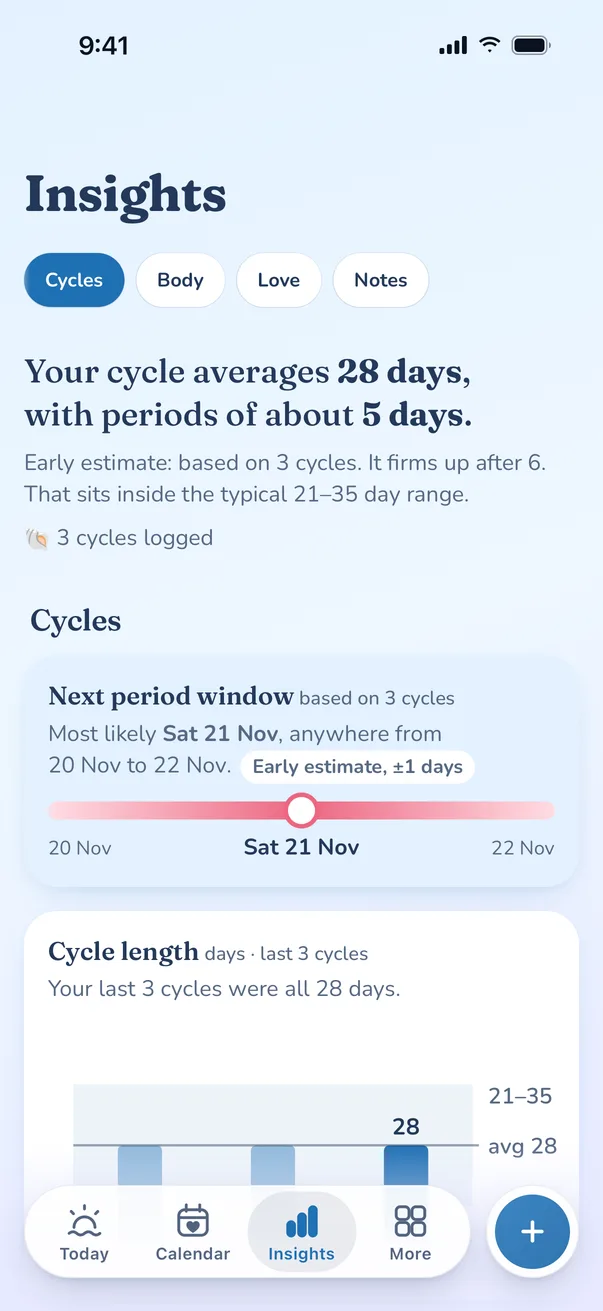
Looking back, it's hard to tell whether low mood came before your period or all month. That's why the RCOG recommends rating symptoms every day for at least two cycles before PMDD is diagnosed. The DRSP is the chart many clinicians use, and the Splash log covers the same areas.
You're not overreacting
PMDD affects an estimated 3 to 8% of people who have periods, and many are told for years that it's "just PMS". IAPMD has peer support and a clinician directory. Read more in our guide to PMDD.
When to see a doctor
- Premenstrual symptoms are affecting work, relationships or daily life.
- You have thoughts of self-harm or ending your life: call Samaritans 116 123 (UK) or 988 (US) now, any time.
- Symptoms are there all month, including after your period.
In the UK you can call NHS 111 for advice, any time. In an emergency call 999 (UK) or 911 (US).
Questions people ask
What is the difference between PMS and PMDD?
Both happen in the days before a period and ease after it starts. PMDD is a severe form, with intense mood symptoms like depression, anxiety or rage that seriously affect work, relationships or daily life.
How is PMDD diagnosed?
By tracking symptoms every day for at least two cycles, often with the DRSP, and talking it through with a GP or specialist (RCOG).
What helps PMDD?
Options include certain antidepressants (SSRIs, sometimes only in the second half of the cycle), some hormonal contraception, CBT and, in specialist care, other hormonal treatments (RCOG). IAPMD has peer support.
Is PMDD a mental health condition?
It's classed as a depressive disorder linked to the cycle. It's thought to be a sensitivity to normal hormone changes, not a hormone imbalance.
Is this a diagnosis?
No. It's a structured way to notice patterns and decide whether, and how soon, to talk to someone. Only a clinician can diagnose, usually with an examination and sometimes tests.
Is anything I enter saved or sent?
No. Everything runs in your browser. Nothing is stored or sent, and the page makes no network requests when you use it.
Sources
Written by the Splash team · Sources checked Oct 2026 · Updated