How does the conception date calculator work?
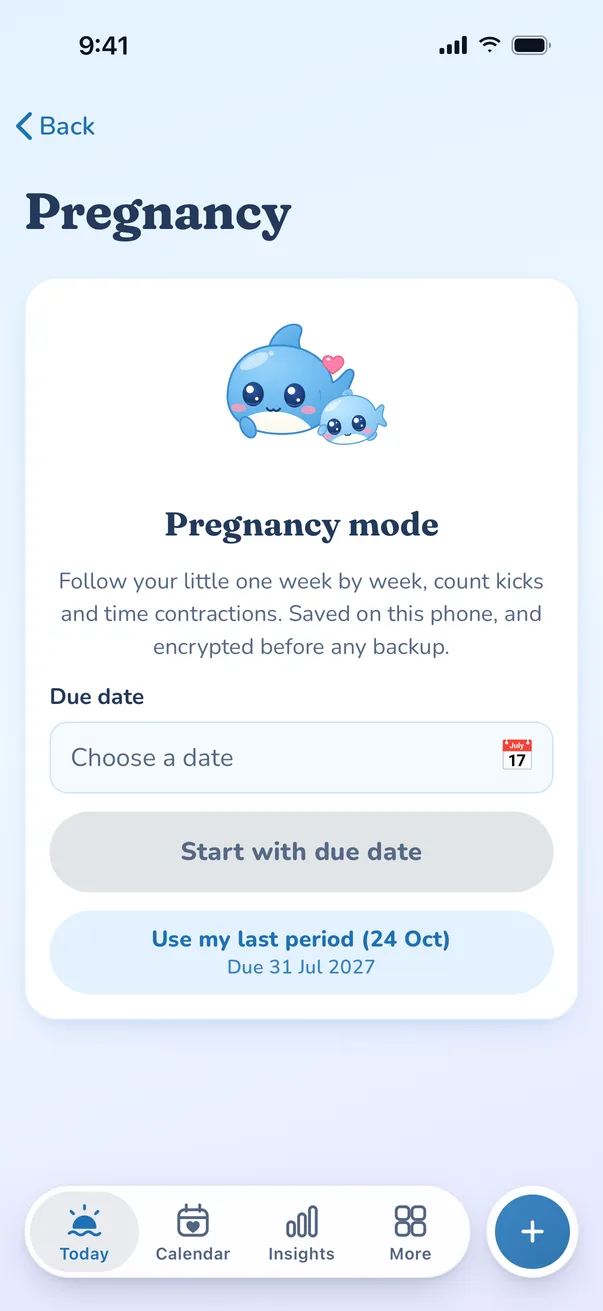
- From your last period: conception most likely happened around ovulation, about 14 days after a 28-day cycle starts (adjusted for your cycle length).
- From a due date: we count back 266 days (38 weeks).
- Sex could have been up to 5 days before ovulation, or about a day after, so we show that window too (Wilcox, 1995).
- If you had a dating scan, use the due date from your scan. It's more reliable than period dates.
Why it's a window
Sperm can survive in the body for up to 5 days, and an egg lives for about a day after ovulation. So sex on any of about 6 days could lead to a pregnancy, and the moment of conception can be days after sex (Wilcox, 1995). That's why no calculator, or scan, can give one exact day.
Your dating scan will refine your dates. See pregnancy trimesters for what comes next.
When to see a doctor
- You have a positive test: contact a GP or midwife to book in. You can usually self-refer to a midwife in the UK.
- You have pain or bleeding in early pregnancy.
- You're unsure about your dates: a dating scan will set them.
In the UK you can call NHS 111 for advice, any time. In an emergency call 999 (UK) or 911 (US).
Questions people ask
How is conception date calculated?
By estimating ovulation: about 2 weeks after the first day of your last period in a 28-day cycle, or 38 weeks before your due date.
Can I know the exact day I got pregnant?
Usually not. Sperm can survive up to 5 days and ovulation varies, so sex on several days could lead to the same pregnancy.
Is conception the same as "2 weeks pregnant"?
Roughly, yes. Pregnancy is counted from the first day of your last period, so you're about 2 weeks pregnant at conception.
Can this prove paternity?
No. Dates can't tell you who the father is. Only a DNA test can.
Is anything I enter saved or sent?
No. Everything runs in your browser. Nothing is stored or sent, and the page makes no network requests when you use it.
Sources
Written by the Splash team · Sources checked Oct 2026 · Updated